Fieldprint Project Registration
This step-by-step guide will assist Project Administrators through the Fieldprint Project Registration Process.
All Fieldprint projects must be registered in FTM’s Project Directory. In accordance with our Project Standard, a project must include multi-stakeholder engagement, make a public comment, set SMART objectives, adhere to a continuous improvement plan, and track progress towards set outcomes.
General Guidance
Note that you are unable to save your progress; you must complete the registration once you start the process. We recommend you gather the necessary information before beginning. You will need the following:
- Your email address and password to log into the Member Portal.
- A title for the project that succinctly reflects the partners, crops, geographic location, resource concern, and sustainable practices to be implemented.
- If applicable, the name of the Partnerships for Climate Smart Commodities grant associated with the project.
- The name of your data management partner, which is either the Fieldprint Platform or a qualified data management partner (the current list of partners is available on our main website).
- A 3-5 sentence project summary that will be shown on our public Project Directory.
- Information regarding:
- Intended duration of the project, in years
- All crops that will be included in the rotation during that time
- Geographic location, by state, county/watershed/supply shed
- Natural resource concerns to be addressed
- Project pathway: Incubation, Insight or Innovation (consult the Fieldprint Project Standard for more information on Project Pathways).
- The specific types of technical and financial assistance that will be provided to growers, such as data entry, cost sharing, etc.
- Which sustainable agriculture practices or systems that will be targeted, such as cover crops, reduced tillage, installing grass waterways, etc.
- Project objectives that include:
- Target maximum number of acres you intend to enroll
- Target maximum number of farmers you intend to engage
- The year you intend to reach the target maximum acres and farmers
- If you agree to allow this project objective to be included in our public Project Directory. It is recommended that all objectives are public to support your commitment to transparency.
- The names of other sustainability initiatives that the growers and acres involved in this project are related to, such as SAI or Project Gigaton.
- Names, organizations and contact information for each person leading or partnering on the project. This does not include the individual farmers participating.
Access Member Portal and Start Registration
To begin, log into your Field to Market member account with your email address and password. If you have trouble logging in, please follow the prompts or reach out to support@fieldtomarket.org.
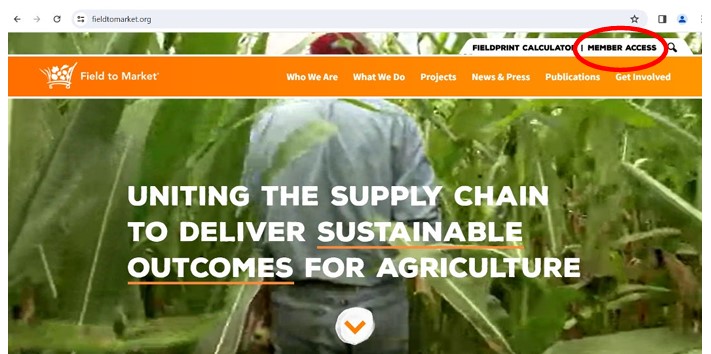
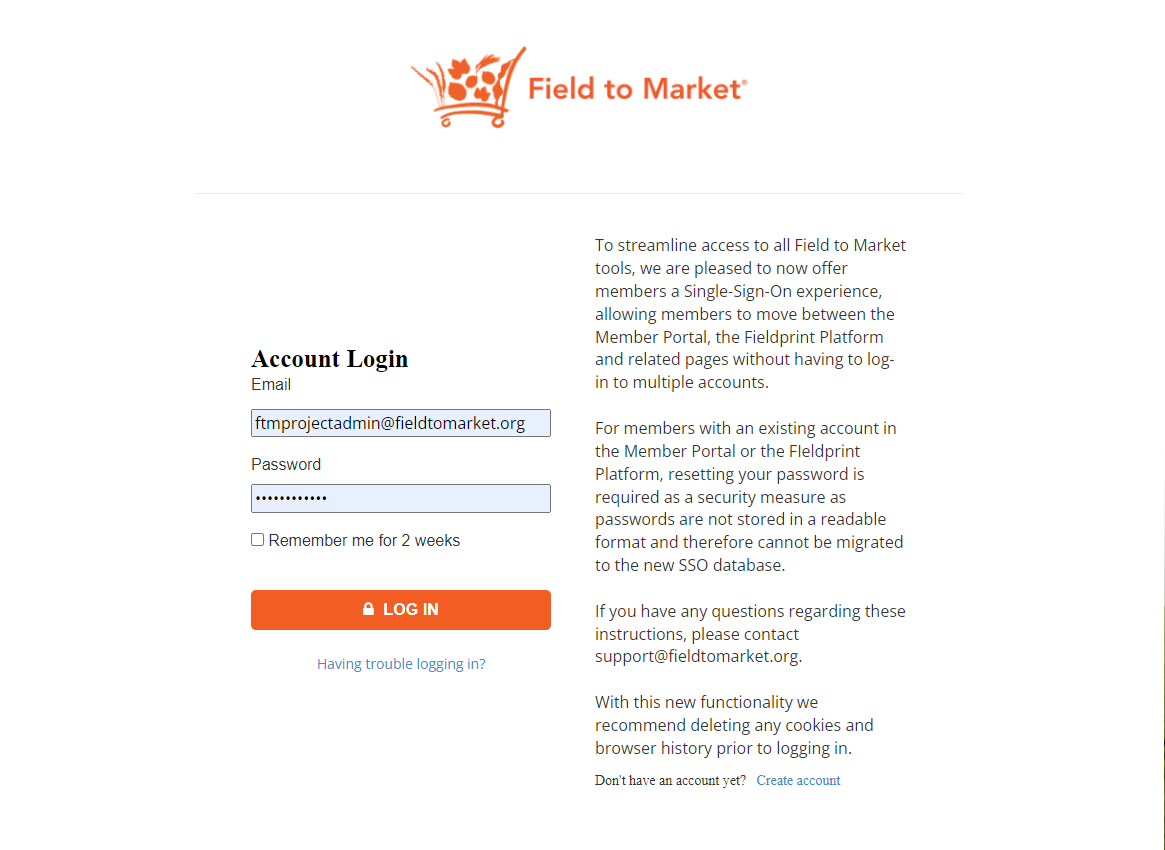
Next, select “Register a Project” from the Project Tab in the Member Portal.
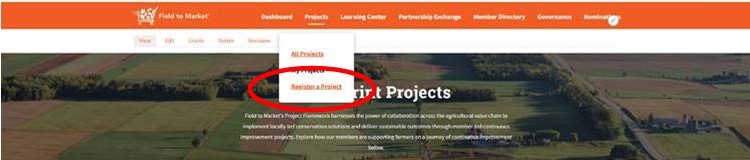
The registration form will appear.
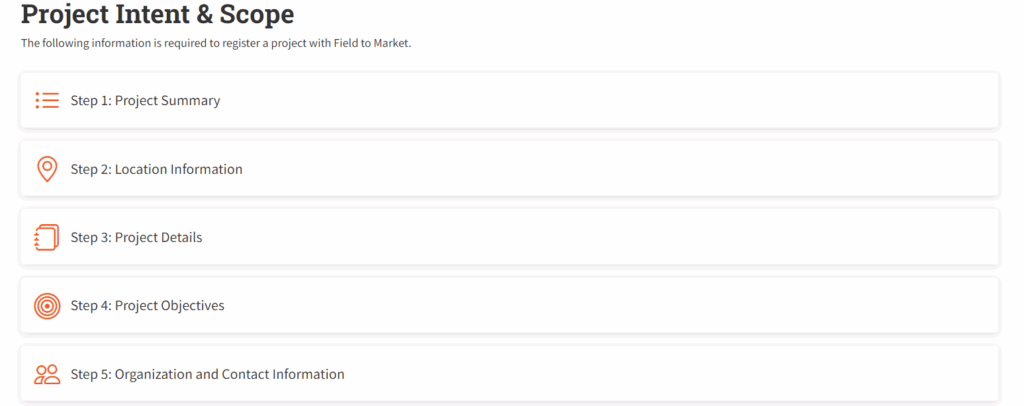
Step 1: Project Summary
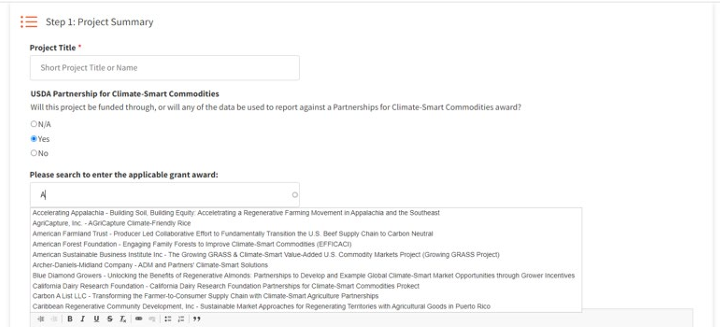
- Give your project a title. Try to develop a title that briefly reflects the project partners, targeted crops, geographic locations, natural resource concerns, and/or the
conservation practice changes. - If the project is funded through or will be used to report against a Partnerships for Climate-Smart Commodities award, enter the applicable grant award. As you type the name, applicable projects will be shown in a dropdown to select your grant award.
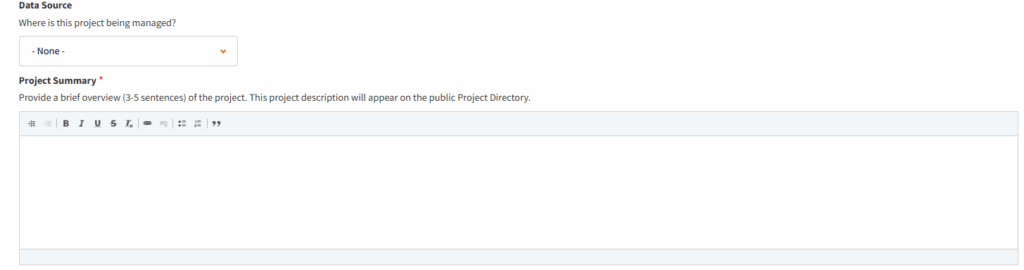
- Select where the project data is being managed – either the Fieldprint Platform or a qualified data management partner (the current list of partners is available on our main website).
- Provide a brief overview of the project. The project description should be 3-5 sentences and should showcase the overarching sustainable agriculture strategy this project hopes to achieve. Please note that this description will appear on the public Project Directory.
- Example Project Description: The State Department of Agriculture’s Soil and Water Conservation Division aims to improve water quality, preserve the natural resources of the state, and ensure the resilience of agricultural production by providing a voluntary, incentive-based conservation program to all eligible cooperators in the state. The program will provide cost share assistance (75% or 90%) to qualifying cooperators on a reimbursement basis to those that implement NRCS and State Best Management Practice that help protect water quality. Cooperators will enter data into the Fieldprint Platform with the assistance of their soil and water conservation district to help provide the state legislator with tangible water quality and other sustainable agricultural improvements. Cooperators, in addition to cost share, will receive advanced technical support to help increase farm sustainability and resilience.
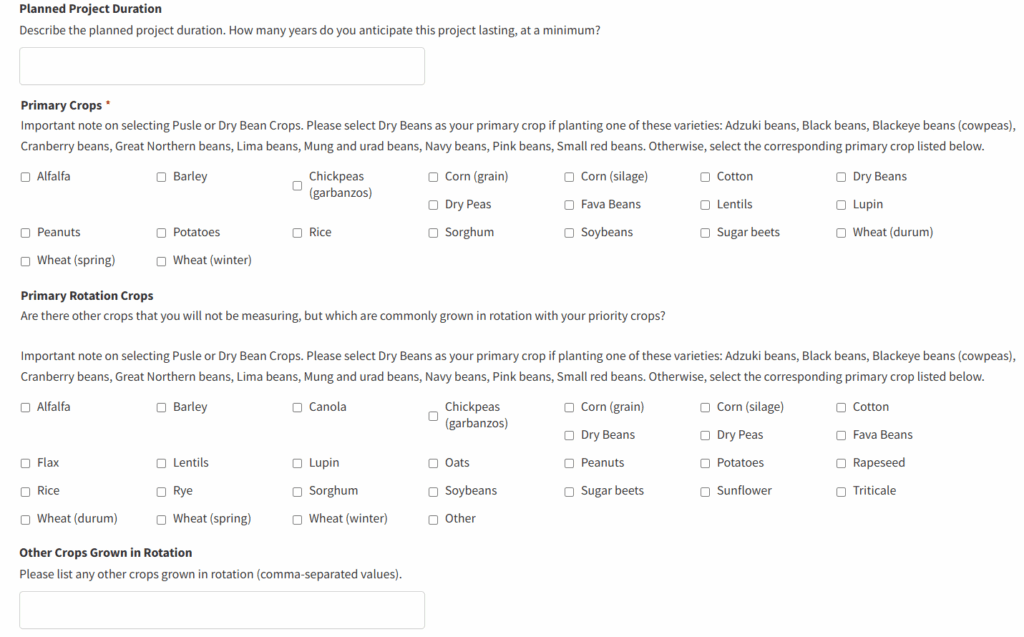
- Indicate the planned project duration. Please note that certain Claims have a minimum number of years a project must participate in to make the claim (i.e. to make an Impact Claim a project must be active for 5 years).
- Mark the crops the project will focus on and the primary rotation crops. If primary rotation crops are not listed, please type them into the text box. All Fieldprint Projects must identify and focus on at least one of the crops within Field to Market’s Platform. The current crops included are alfalfa, barley, corn for grain, corn for silage, cotton, peanuts, potatoes, pulses, rice, sorghum, soybeans, sugar beets, and wheat.
Step 2: Location Information
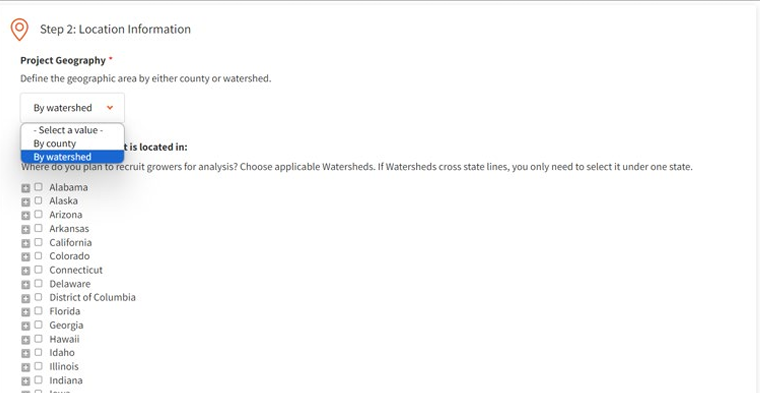
- Define the geographic area of the project. While all projects must focus on a state level at minimum, we encourage examining boundaries at a sub-state level, by county, watershed, or supply shed.
- Delineate the counties or watersheds in the project area by checking the state and then the county or watershed that encompasses the project by clicking the plus (+) sign to find the county or watersheds. Please note that project locations can change during the project’s lifetime. To add or remove locations from the project after registration, please contact the Sustainability Projects Manager or email support@fieldtomarket.org.
Step 3: Project Details
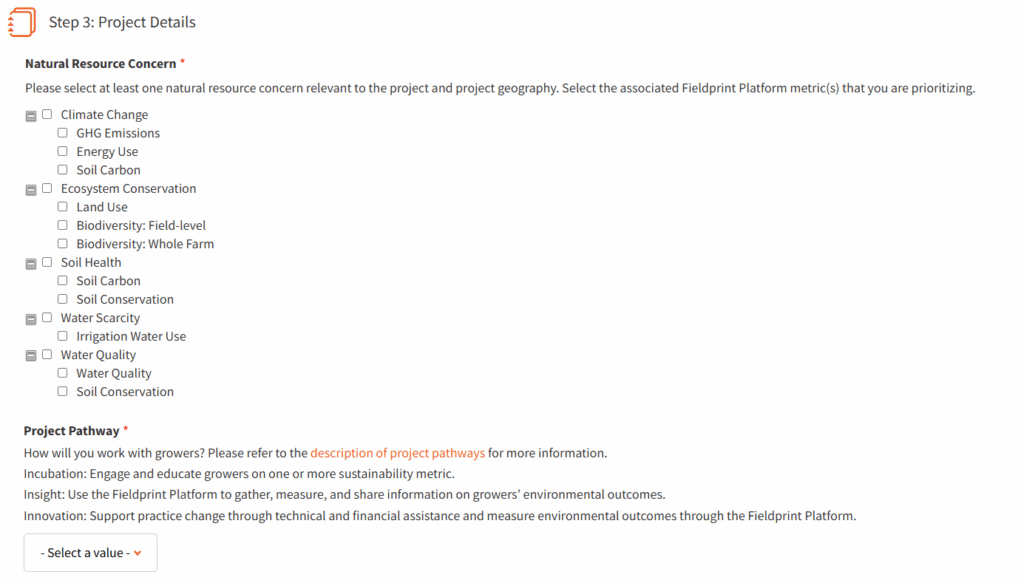
- Indicate at least one natural resource concern relevant to the project and the project geography. According to the Fieldprint Project Standard, projects must identify at least one natural resource concern that the project’s continuous improvement objective(s) will address relevant to pressing local conservation priorities in the project region and/or global sustainable development priorities and select at least one corresponding Field to Market metric.
- Select the project pathway. Please note that as the project progresses, the pathway may evolve from incubation to insight and eventually to innovation. To change the pathway, please contact the Sustainability Projects Manager or email support@fieldtomarket.org.
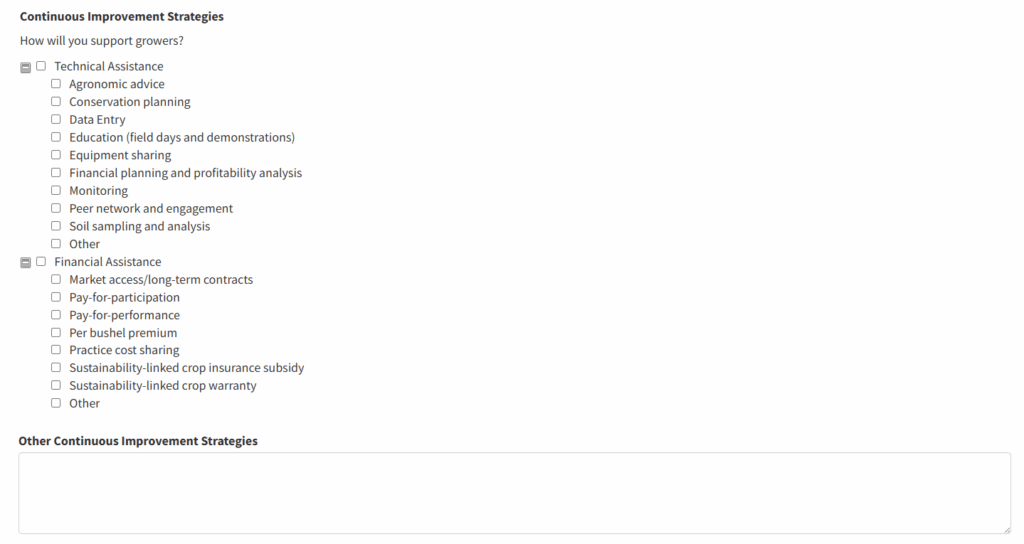
- Mark the strategies the project implementers will use to support growers on their continuous improvement journey. Check all that apply and use the text box to write in additional strategies that are not covered by the common ones listed.
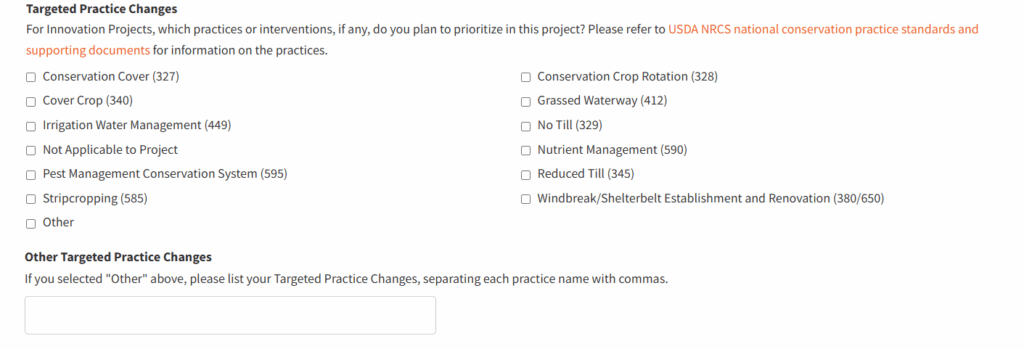
- Please note that targeted practice changes are required for Innovation Projects. If your project focuses on adoption of conservation practices, please indicate which ones by selecting from the common ones listed or write in the text box additional strategies not covered by the common ones listed in this step. Please refer to USDA NRCS national conservation practice standards and supporting documents for information on the practices.
Step 4: Project Objectives
- Provide information on:
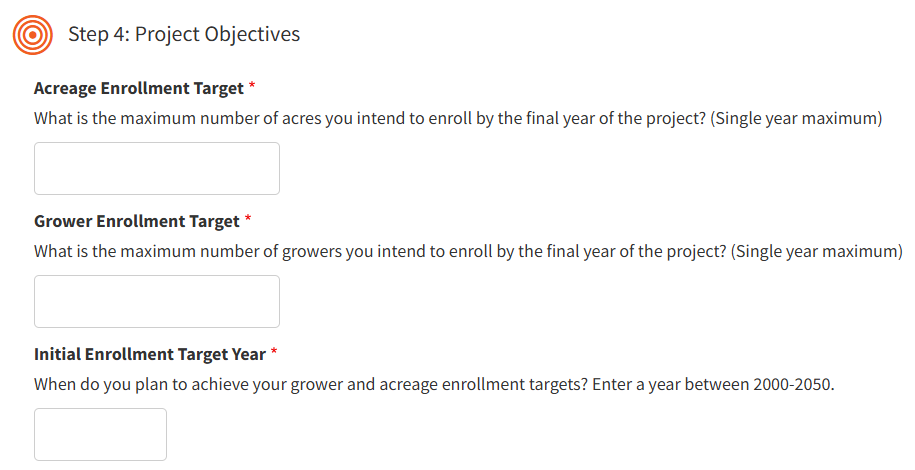
- The maximum number of acres you intend to enroll by the final year of the project (Single year maximum);
- The maximum number of growers you intend to enroll by the final year of the project (Single year maximum). Note: Projects must require each grower to enter data for a minimum of 10% of their acres into the Fieldprint Platform to be enrolled in the Project for a specific crop; and
- The enrollment target year (the year you hope to achieve your acre and grower enrollment targets).
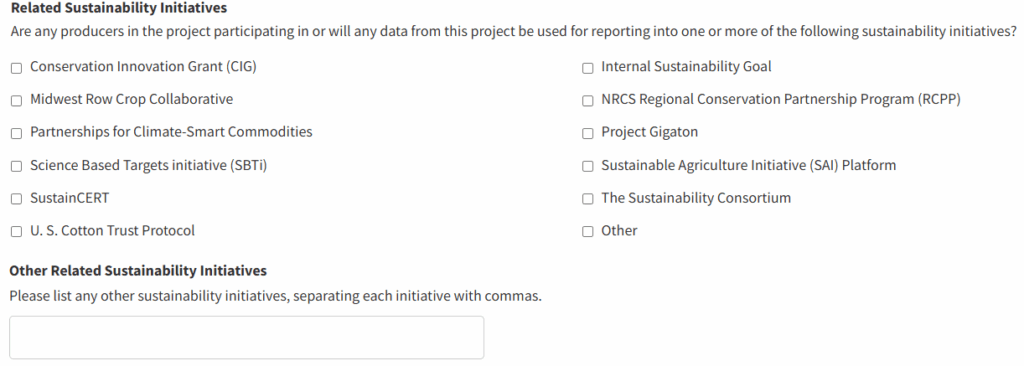
- Check all related sustainability initiatives related to the project. Many supply chain projects can increase their value to stakeholders and the local and global community by aligning with local or landscape level conservation priorities as well as global sustainability objectives.
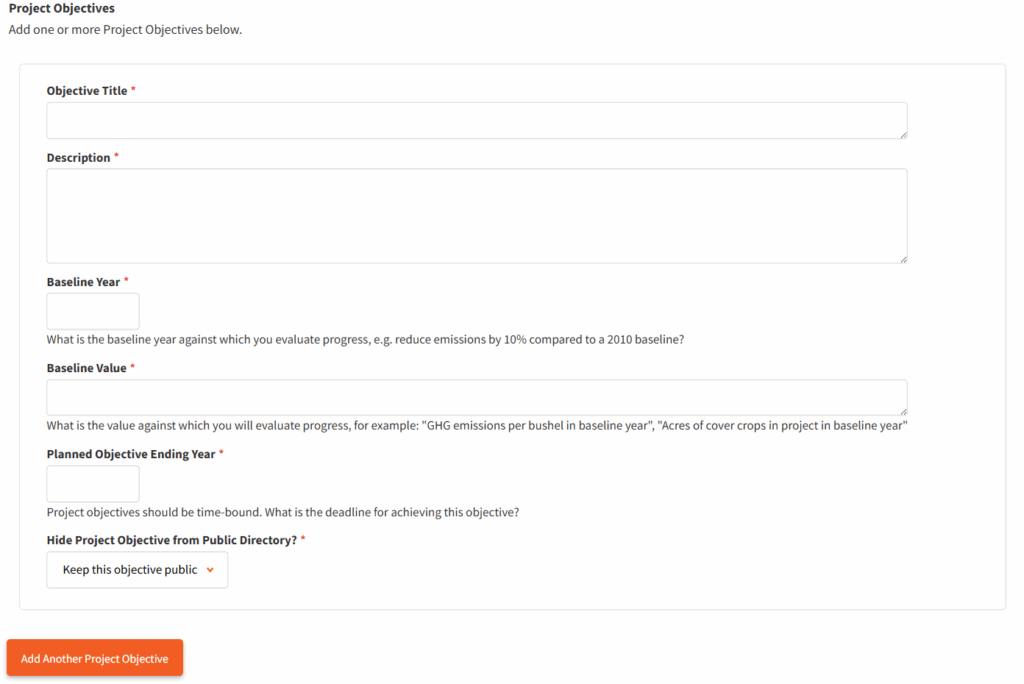
- Add one or more Project Objectives. Be sure to include the objective title, a description of the objective, the baseline year, baseline value and planned objective ending year. Note that goals must be SMART (Specific, Measurable, Achievable, Relevant and Timebound) and can be completed in different timelines than other objectives and the project timeline.
- Each project must set one project objective, and it is recommended that projects have at least two.
- Indicate if you would like each objective displayed on the public Fieldprint Project Directory. This is recommended to have this displayed as it helps tell your sustainable agriculture story and showcase your commitment to transparency.
Step 5: Organization and Contact Information
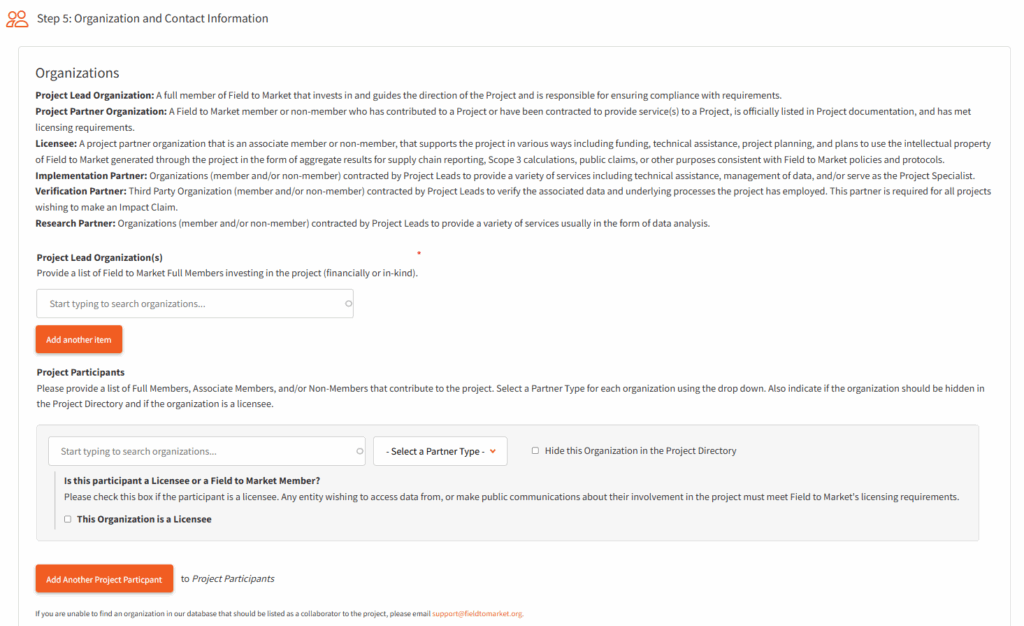
- Enter Project Lead Organization(s) and Project Participants based on the descriptions provided. Select project partners type and indicate if they will be licensing based on Field to Market’s policy and/or if the organization needs to be hidden from the Project Directory. Please note that only Full Members can lead projects and that licensing requirements apply to Associate and Non-Members. Field to Market requires project partners to pay licensing fees based on the number of acres the project partner assigned and benefiting from through the project.
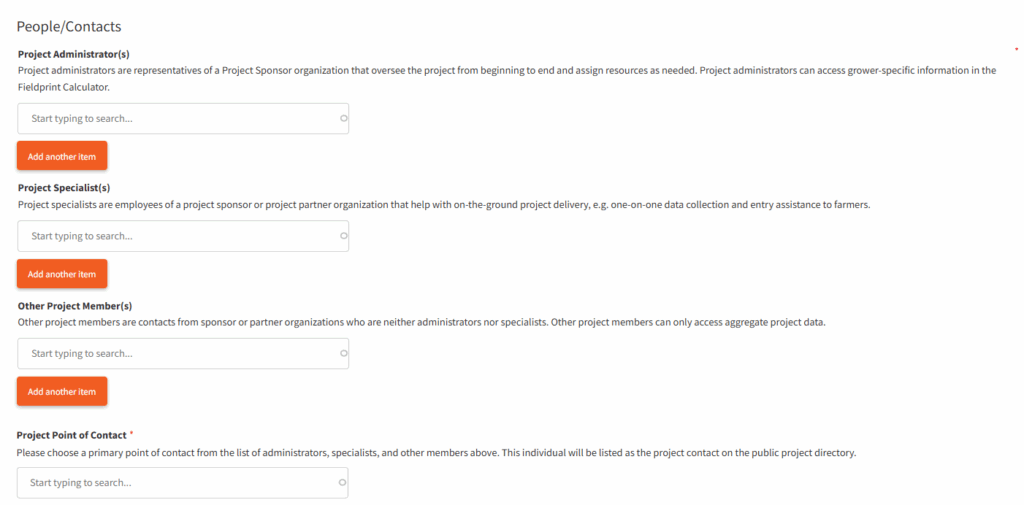
- Enter each Project Administrator. Project Administrators are representatives of a Project Lead organization and oversee the project from beginning to end and assign
resources as needed. Project Administrators can access grower-specific information in the Fieldprint Calculator. - Enter each Project Specialist. These are employees of a project lead or partner organization that help with on-the-ground project delivery, e.g. one-on-one data collection and entry assistance to farmers.
- Enter other project members. Other project members can only access aggregate project data.
- Enter the project point of contact. Please choose a primary point of contact from the list of administrators, specialists, and other members above. This individual will be listed as the project contact on the public project directory.
Step 6: Submit the Project Registration
Click Submit button.
Fieldprint Projects are set to draft and are not automatically published on the Public Directory after submission. The Sustainability Projects Manager will review all Fieldprint Project Submissions within 1-2 weeks of the submission. If you need to make a change to your Project Registration or have questions, please contact the Sustainability Projects Manager or email support@fieldtomarket.org.